
Over 30 Plant-Based Campus Campaigners Join Massive Stockholm Climate Strike
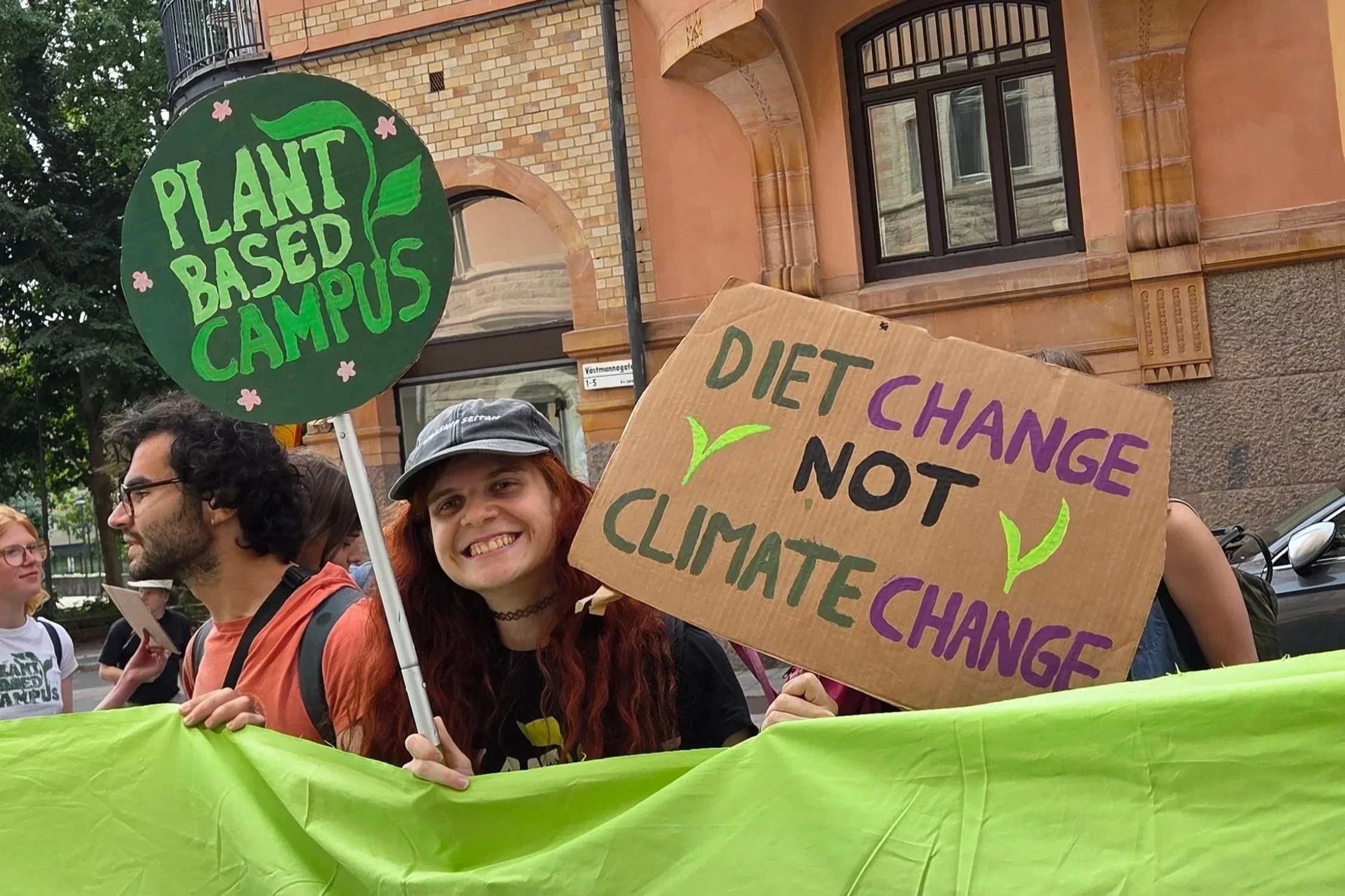
STOCKHOLM, SWEDEN — On August 23 2026, more than 30 campaigners representing six different Plant-Based Campus (PBC) chapters marched in one of Stockholm’s largest climate protests to date. Amidst a crowd of tens of thousands, the PBC student campaigners carried dozens of signs and an 8-meter banner highlighting the undeniable link between food systems and the worsening climate crisis. The group’s core demand is that universities must follow their own research and transition to 100% plant-based catering. This massive turnout in Stockholm comes at a critical moment. With the Swedish general election approaching and amidst recent policy rollbacks on national environmental goals, institutional climate leadership is more vital than ever.
Nora Guvå, a campaigner from the PBC KTH campaign said:
"We were so happy to have over 30 campaigners from six universities where we have plant-based campaigns join us at the Stockholm climate protest. We're urging all stakeholders, including politicians and university administrators, to recognise that a plant-based food system transition is a necessary part of any sustainable climate policy."
A recent report by researchers at the Swedish University of Agricultural Sciences (SLU) and the Stockholm Resilience Centre highlights that reducing the consumption of meat and dairy is the single most effective food-related action to lower greenhouse gas emissions, given that animal products account for roughly 60% to 70% of emissions in a typical Western diet. The report emphasizes that a well-planned plant-rich diet not only provides all necessary nutrients but also lowers the risk of chronic conditions associated with high red and processed meat consumption.
Universities are uniquely positioned to drive food system change at scale. As major food purchasers and influential cultural institutions, they make thousands of daily decisions through catering contracts and campus operations that translate directly into emissions and land use impact. When plant-based food becomes the default in higher education, it signals that sustainable choices are both credible and achievable on a large scale. By committing to 100% plant-based menus, universities can align their food policies with the world-leading climate science they produce, effectively practicing what they teach while educating the next generation of leaders.
Plant-Based Campus' involvement at this year's climate protest with campaigners from Stockholm University, the Swedish Royal Institute of Technology (KTH), Karolinska Institutet, Uppsala University, Sweden's agricultural university, and Linköping University marks it’s highest turnout for a climate protest so far. It also comes at a time of significant expansion, as Plant-Based Campus is now active across 17 campuses in 6 countries, and has plans to launch new campaigns at universities across Denmark, India, Sweden and Finland in the coming weeks.
Fill out the form (here) to join an existing Plant-Based Campus campaign, or start a new one.
Plant-Based Campus is a democratic student-led campaign working with universities and higher education institutions to transition to 100% plant-based catering to reduce environmental impacts.