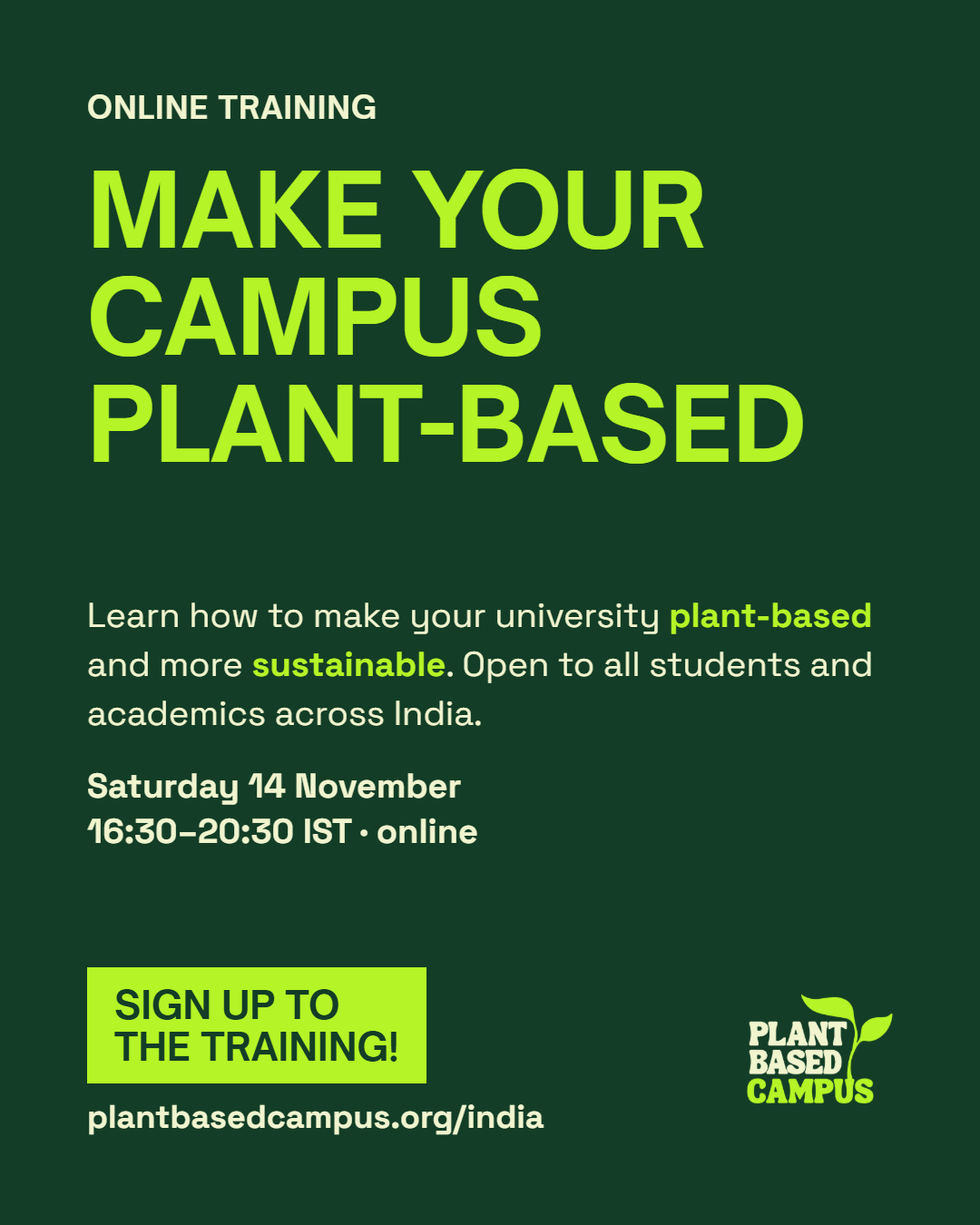
Plant-Based Campus (PBC) is holding a free online training for students and academics in India. It is open to anyone at a university in India, whether or not they have taken part in activism before, and no experience is needed.
Date: Saturday 14 November 2026
Time: 16:30 to 20:30 India time (GMT+5:30)
Format: online, with breaks and plenty of time for questions
Who can join: any student or academic in India
India is home to one of the world’s largest and most energetic student populations, and it has a long, proud tradition of plant-based eating. Yet it has often received less attention than it deserves from nonprofits and social movements, even as consumption of animal products rises quickly. That growth can put real pressure on the environment, public health and food security, which makes this a moment when India cannot afford to be overlooked. As one of the countries most exposed to climate change, India also has a lot to gain from food systems that use less land and water and produce fewer emissions.
Over four hours, participants will learn about PBC’s history, its values and its theory of change: how student campaigns can persuade universities to move towards plant-based food systems. The session will also look at how to make meaningful change in an Indian context, from understanding your own campus to setting up a PBC chapter if you want to.
PBC is an inclusive, non-violent environmental movement. It supports universities aligning their catering with their own research, rather than on blaming individuals or judging how people eat.
If you have been undecided about getting involved in making your communities more sustainable, this is a low-pressure way to find out what is possible. You do not have to start a chapter or sign up for anything afterwards. You can come to listen, ask questions and decide for yourself.
Register for the training at plantbasedcampus.org/india.
Plant-Based Campus is a democratic student-led campaign working with universities and higher education institutions to transition to 100% plant-based catering to reduce environmental impacts.