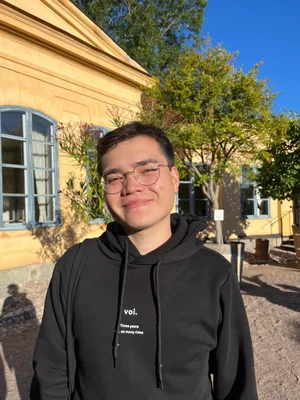
Plant-Based Campus Presents at Environmental Conference at Linköping University.
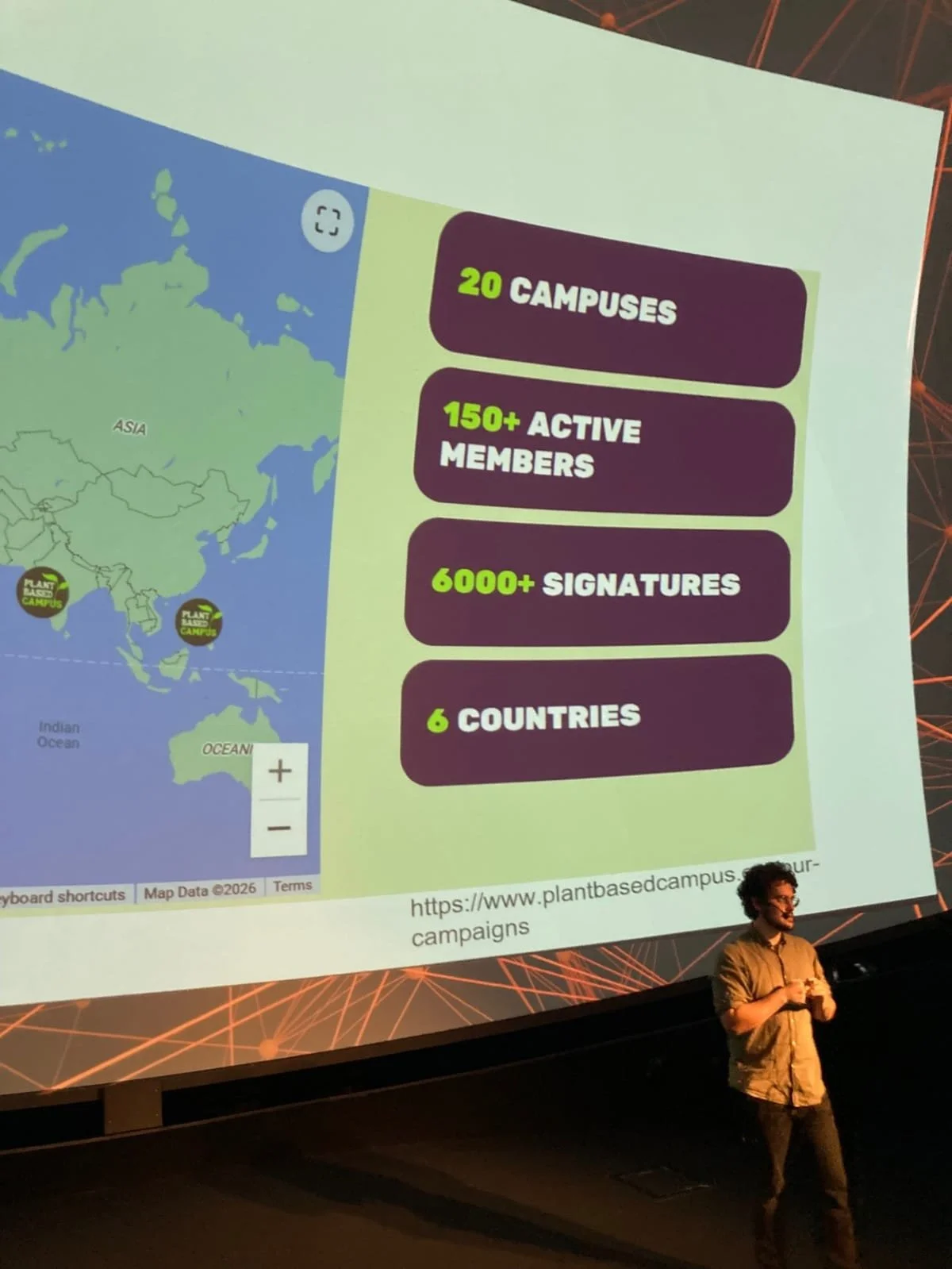
Manuel, the Plant-Based Campus Linköping University Coordinator presenting at the MLUH conference.
In September 2026, Manuel Fernández Santana, a PhD student in Science Education and co-coordinator of Plant-Based Campus (PBC) Linköping, presented the campaign at the MLUH conference. MLUH is the network for environmental management at Swedish universities and university colleges. Linköping University hosted the two-day event at Campus Valla and then Campus Norrköping. Manuel was invited by Anna Gustafsson, an environmental strategist at the university, and gave a 15-minute presentation to staff from universities across Sweden. Instead of leading with statistics, he invited the audience to imagine what happens if a plant-based transition works.
The food served at the conference included meat. PBC is calling on MLUH to have plant-based catering at its future conferences and events, and to make it the standard for the network’s own gatherings. MLUH brings together the people who run environmental management at Sweden’s universities, so its events are a visible place to put climate commitments into practice. A conference menu is also one of the quickest changes an organiser can make. Plant-based catering at MLUH events would show other institutions what is possible, and give delegates a working example to take back to the catering at their own universities.
Manuel Fernández Santana, co-coordinator of PBC Linköping, says:
“It was a great chance to introduce the campaign to people who shape sustainability work at universities across Sweden. Their universities have committed to reducing their climate impact, so we hope plant-based catering at future MLUH conferences and events is a natural next step. The response was warm, and I’m glad other universities are asking to hear more.”
On the second day, delegates visited the Visualization Center in Norrköping, a public science museum where Manuel carries out his research. He introduced exhibits on food production and consumption.
The call builds on commitments universities have already made. The Climate Framework, adopted by the Association of Swedish Higher Education Institutions (SUHF) in October 2021, commits Swedish institutions to reduce their climate impact and set far-reaching targets. SUHF’s supporting collection of examples (in Swedish), updated in cooperation with MLUH, lists food and catering as an area for action. It suggests new routines and policies for climate-smart catering at conferences and internal training, including low-emission menus. Linköping University has joined the framework and says it strives to be a model in minimising the climate impact of its activities.
Plant-based defaults have worked at university events. A 2022 study in Frontiers in Sustainable Food Systems by Renate Boronowsky and colleagues ran three randomised controlled trials at events at UCLA and Harvard. People offered a plant-based default meal were 3.52 times more likely to choose a plant-based meal. The authors modelled reductions of up to 42.3% in greenhouse gas emissions and 41.8% in land use compared with a meat default, when the meat option was beef.
Halmstad University has since contacted Linköping University’s environmental strategist to ask about a presentation from PBC. Manuel is looking to attend other conferences in the near future, and PBC is looking at how to engage with sustainability networks in higher education institutions across Sweden.
Fill out the form (here) to get involved with PBC Linköping, join another campaign, or start a new one.
Plant-Based Campus is a democratic student-led campaign working with universities and higher education institutions to transition to 100% plant-based catering to reduce environmental impacts.